
What the service can include
Identifying the spring system, replacing broken or worn springs with correctly sized ones, setting tension and checking the cables, drums and balance.
A garage door spring that has snapped, stretched or lost tension, leaving the door heavy, crooked or stuck. The Lock Doc begins with the exact hardware, access need, and authorization before recommending the work.
Garage door springs store enough energy to cause serious injury. Leave a door with a broken spring where it is, do not use the opener to force it, and do not try to wind or release a spring yourself.
Identifying the spring system, replacing broken or worn springs with correctly sized ones, setting tension and checking the cables, drums and balance.
Whether the door uses torsion or extension springs, the door's weight and height, the spring size and cycle rating, and the condition of the cables and drums.
Photos of the springs above or beside the door, the door's width and height, whether the door is open or closed, and the opener model if there is one.
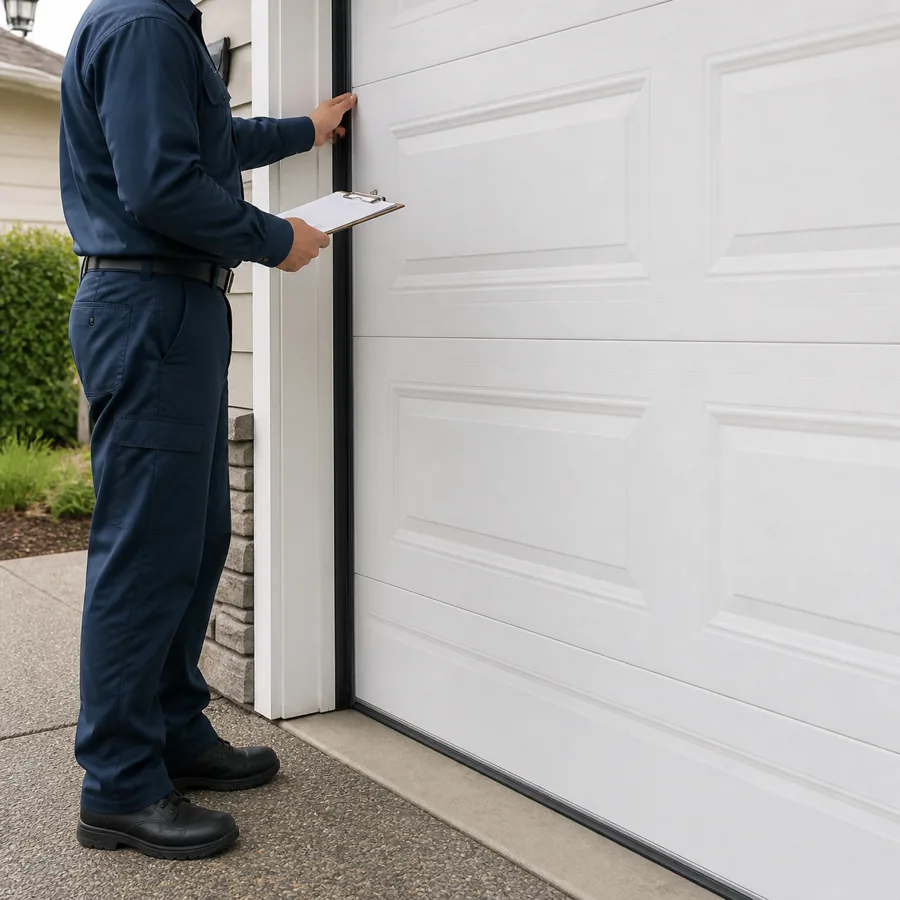
Garage door springs store enough energy to cause serious injury. Leave a door with a broken spring where it is, do not use the opener to force it, and do not try to wind or release a spring yourself.
Share photos of the full door, tracks, visible hardware, and opener information when relevant before a visit is arranged.
Most newer sectional doors use one or two torsion springs on a steel shaft above the door. As the door closes the springs wind up; as it opens they unwind and turn the cable drums, which do most of the lifting for you. A broken torsion spring usually shows as a visible gap in the coil.
Older doors often use extension springs that stretch along each horizontal track. These should always have a safety cable running through them so a broken spring cannot whip across the garage. If yours do not, mention it when you call.
A loud bang from the garage, a door that suddenly feels far heavier than usual, an opener that strains or reverses, or a door that rises crookedly are all common signs. Cables that hang slack or have come off a drum often go with a broken spring.
Springs are usually replaced in matched pairs on two-spring doors, because the second spring has done the same number of cycles. The technician sizes new springs to the door's weight and sets the tension so the door stays balanced part-way open.
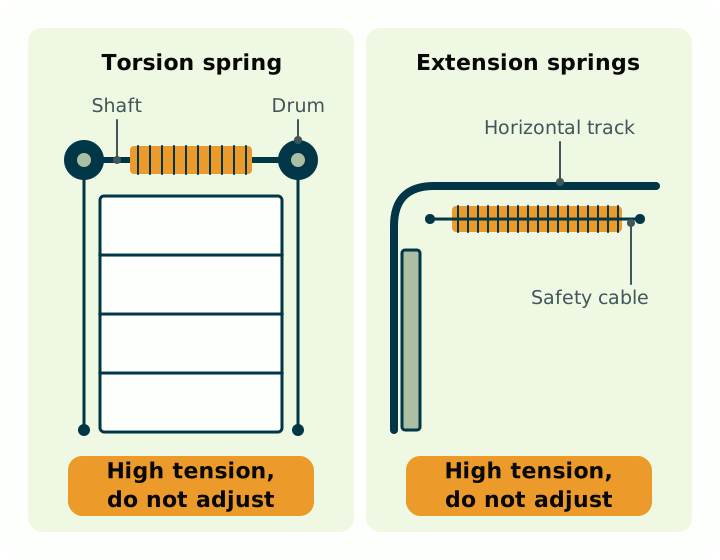
Torsion springs sit on a shaft above the door; older doors use extension springs beside the tracks, with safety cables. Both carry high tension and are not a do-it-yourself adjustment.
The service path stays simple, even when the hardware is not.
See the complete family overview or start with the problem if you are not sure which service page fits.
Local details, common situations and questions for each area we cover.
Useful details to confirm before the work is scheduled.
Photos of the springs above or beside the door, the door's width and height, whether the door is open or closed, and the opener model if there is one. These details help define the request before a service window is confirmed.
Identifying the spring system, replacing broken or worn springs with correctly sized ones, setting tension and checking the cables, drums and balance. The final scope follows the condition and compatibility found during the assessment.
Whether the door uses torsion or extension springs, the door's weight and height, the spring size and cycle rating, and the condition of the cables and drums. The recommendation should follow those facts rather than a preset product package.
Garage door springs store enough energy to cause serious injury. Leave a door with a broken spring where it is, do not use the opener to force it, and do not try to wind or release a spring yourself.
Call now or send the service details online.