
What the service can include
Inspecting the cables, drums and bottom brackets, replacing damaged cables, re-seating them on the drums and rebalancing the door.
A frayed, slack or snapped lift cable, or a cable that has come off its drum and left the door hanging unevenly. The Lock Doc begins with the exact hardware, access need, and authorization before recommending the work.
Lift cables are attached to springs under high tension. Do not try to re-wind a cable or remove a bottom bracket yourself, and keep people and vehicles clear of a door that is hanging crooked.
Inspecting the cables, drums and bottom brackets, replacing damaged cables, re-seating them on the drums and rebalancing the door.
Whether a cable broke or simply came off the drum, the condition of the drums and bottom brackets, and whether a spring or track problem caused the cable to fail.
Photos of both sides of the door at the bottom corners and the drums above the door, and a note on whether the door is stuck open, closed or part-way.
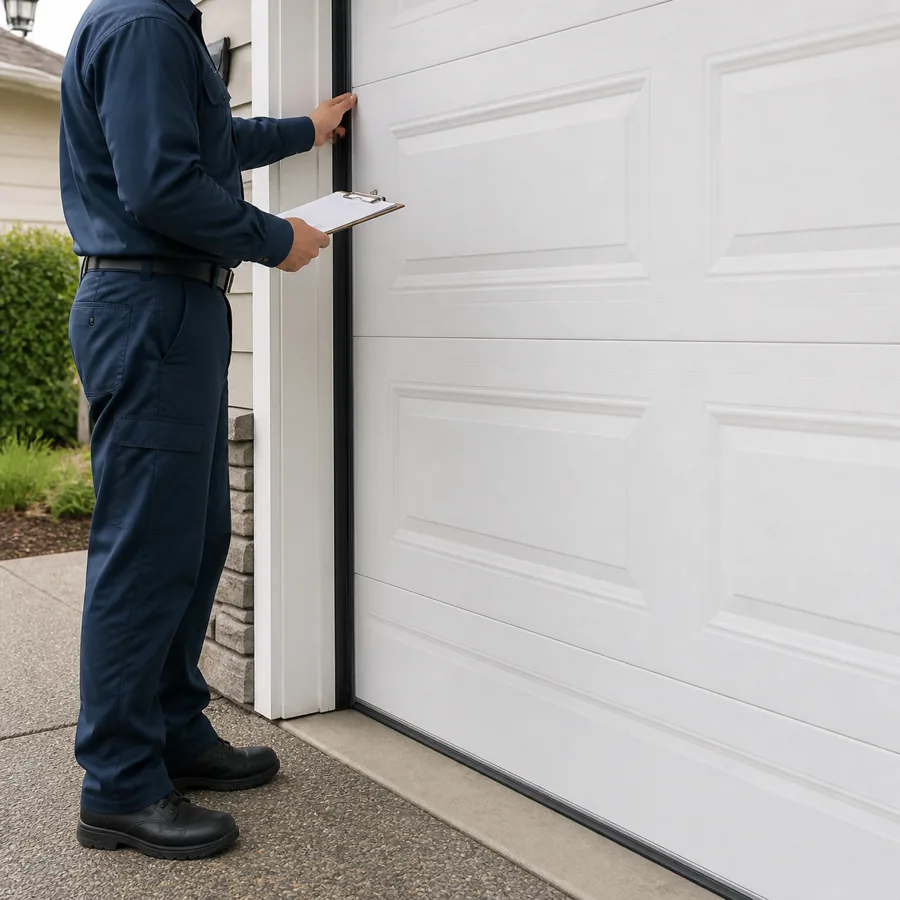
Lift cables are attached to springs under high tension. Do not try to re-wind a cable or remove a bottom bracket yourself, and keep people and vehicles clear of a door that is hanging crooked.
Share photos of the full door, tracks, visible hardware, and opener information when relevant before a visit is arranged.
On a torsion-spring door, a steel cable runs from each bottom corner bracket up to a drum on the spring shaft. As the springs turn the drums, the cables wind on and lift the door evenly from both sides. On an extension-spring door the cables run through pulleys instead.
Because the cables carry the weight of the door, a cable that frays, rusts or jumps off its drum makes the door lift unevenly, jam in the tracks or drop at one side.
Cables wear with age and corrosion, and damp garages speed that up. A door that hits an obstruction, a spring that breaks, or a bottom bracket that loosens can also let a cable go slack and slip off the drum.
The repair often involves more than the cable itself, so the technician checks the drums, bottom brackets, springs and tracks together and tests the door through a full cycle afterwards.
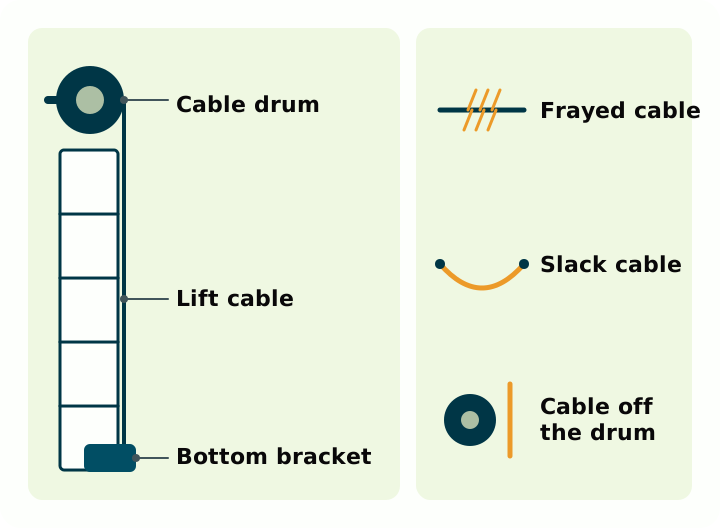
Lift cables run from the drums down to the bottom brackets and share the door's weight. A frayed, slack or derailed cable means stop using the door and call for service.
The service path stays simple, even when the hardware is not.
See the complete family overview or start with the problem if you are not sure which service page fits.
Local details, common situations and questions for each area we cover.
Useful details to confirm before the work is scheduled.
Photos of both sides of the door at the bottom corners and the drums above the door, and a note on whether the door is stuck open, closed or part-way. These details help define the request before a service window is confirmed.
Inspecting the cables, drums and bottom brackets, replacing damaged cables, re-seating them on the drums and rebalancing the door. The final scope follows the condition and compatibility found during the assessment.
Whether a cable broke or simply came off the drum, the condition of the drums and bottom brackets, and whether a spring or track problem caused the cable to fail. The recommendation should follow those facts rather than a preset product package.
Lift cables are attached to springs under high tension. Do not try to re-wind a cable or remove a bottom bracket yourself, and keep people and vehicles clear of a door that is hanging crooked.
Call now or send the service details online.